Feeding Your Immune System
WhyAreWeWhispering.com

All the King's horses and all the King's men, couldn't put Humpty together again....
You can be healthy and not fit.
You can be fit and not healthy.
And you can be healthy, fit and not have the body you want.
Wanna renovate? Fix the foundation first - get healthy then fit before you attempt to transform your body.
Feeding Your Immune System
Your immune system functions like an army, it's a complex mechanism made up of the skin, gastric acid, mucus, tears and an array of cells… white blood cells, macrophages, natural killer cells, T-cells, and B-cells to name a few. When your immune system is compromised, it is virtually impossible to remain in good health because your body will not have the ability to fight off foreign invaders like viruses, bacteria, parasites, pollutants, even the very toxins that it produces on a daily basis as a natural byproduct of it's various metabolic functions.

To boost your immune system, here are the top immune building nutrients and the top foods that contain them.
Vitamin C
Vitamin C is a water-soluble vitamin that increases the production of infection-fighting white blood cells and antibodies and increases levels of interferon, the antibody that coats cell surfaces, preventing the entry of viruses. Vitamin C reduces the risk of cardiovascular disease by raising levels of HDL (good) cholesterol while lowering blood pressure and interfering with the process by which fat is converted to plaque in the arteries. As an added perk, those whose diets are higher in vitamin C have lower rates of colon, prostate, and breast cancer.

Excellent food sources of vitamin C are citrus fruits or citrus juices, berries, green and red peppers, tomatoes, broccoli, and spinach. You may also want to use a fruit and vegetable capsule daily to get more nutrients from food.
Vitamin E
Vitamin E is a fat-soluble vitamin that stimulates the production of natural killer cells, those that seek out and destroy germs and cancer cells. Vitamin E enhances the production of B-cells, the immune cells that produce antibodies that destroy bacteria. Vitamin E may also reverse some of the decline in immune response commonly seen in aging. Vitamin E has also been implicated in lowering the risk of cardiovascular disease. In the Harvard School of Public Health study of 87,000 nurses, Vitamin E, from food sources, was shown to cut the risk of heart attacks by 50%.
Excellent food sources of vitamin E are nuts, seeds, eggs, whole grains, vegetable oils and dark green leafy vegetables.
Garlic
Don’t be surprised that this flavorful member of the onion family is also a powerful immune booster that stimulates the multiplication of infection-fighting white blood cells, boosts natural killer cell activity, and increases the efficiency of antibody production.
The immune-boosting properties of garlic seem to be due to its sulfur-containing compounds, such as allicin and sulfides. Garlic can also act as an antioxidant that reduces the build-up of free radicals in the bloodstream. Garlic is also a heart-friendly food since it keeps platelets from sticking together and clogging tiny blood vessels.
As usual, forget the supplements; just add some raw garlic to your daily meals.
Omega 3 Fatty Acids
The omega 3 fatty acids in flax seed oil and fatty fish (such as salmon, tuna, and mackerel) act as immune boosters by increasing the activity of phagocytes, the white blood cells that eat up bacteria. Remember your grandmother’s daily dose of unpalatable cod liver oil? Essential fatty acids also protect the body against damage from over-reactions to infection. Try a tablespoon of flax seed oil or fish oils along with Vitamin E rich foods. The essential fatty acids and Vitamin E act together to boost the immune system.
Carotenoids & Bioflavonoids
I’m sure you’re familiar with beta-carotene. However, Beta carotene is only one member of the very large carotenoid family (there are over 800 known carotenoids). Others include alpha carotene, lycopene and lutein. All the carotenoids work together to increase the number of infection-fighting cells, natural killer cells, and helper T-cells, as well as being powerful antioxidants that mops up excess free radicals that accelerate aging.

Bioflavonoids are a group of phyto-chemicals (plant chemicals) that aid the immune system by protecting the cells of the body against environmental pollutants. Bioflavonoids protect the cell membranes against the pollutants trying to attach to them. Along the membrane of each cell there are microscopic parking spaces, called receptor sites. Pollutants, toxins, or germs can park here and gradually eat their way into the membrane of the cell, but when bioflavonoids fill up these parking spots there is no room for toxins to park.
Bioflavonoids also reduce the cholesterol's ability to form plaques in arteries and lessen the formation of microscopic clots inside arteries, which can lead to heart attack and stroke. Studies have shown that people who eat the most bioflavonoids have less cardiovascular disease. A diet that contains a wide variety of fruits and vegetables, at least six to nine servings per day, will help you get the bioflavonoids needed to help your immune system work in top form.
Foods that suppress your immune system:
Sugar
Don’t be surprised to find sugar at the very top of this list. Just 8 tbsp. of sugar, that’s the amount in one can of regular cola, is enough to suppress your immune system by forty percent for up to six hours. Sugar impairs the ability of your white blood cells to kill germs.
Alcohol
Having a drink (the equivalent of 12 ounces of beer, 5 ounces of wine, or 1 ounces of hard liquor) every now and then does not negatively affect your immune system. However, three or more drinks can reduce the ability of white blood cells to kill germs. Excessive alcohol in the blood also suppresses the ability of the white blood cells to multiply, inhibit the action of killer white cells on cancer cells, and lessen the ability of macrophages to produce tumor necrosis factors. Any amount of alcohol that is enough to cause intoxication is also enough to suppress immunity.


Your Brain on Food
For the past two decades the American public has been fed the same useless advice, “eat less and move more.” But this certainly hasn’t prevented the obesity rate from skyrocketing among all segments of the population. Many well-meaning nutrition professionals also gave the same inaccurate advice to their clients. The common thought has always been that a calorie is a calorie, so as long as you eat fewer calories and move more you should be able to keep your weight under control. Unfortunately, when it comes to your brain on food, the amount of calories involved is really the least important factor.
Nucleus Accumbens + You.
The past decade has been a very exciting time for brain researchers because new technologies have enabled them to see exactly what’s going on in the brain and which areas are activated by food, drugs, or just thinking about food and drugs. Recent studies have validated what most of us proponents of a whole food diet have been teaching for years; not all calories are created equal.In fact, a recent study published in the American Journal of Clinical Nutrition reported that sugary foods and highly processed
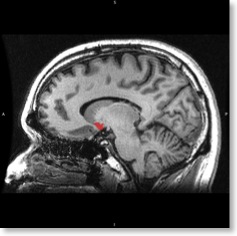
This is a process that can often spiral out of control very quickly because highly processed high glycemic foods often cause a spike in blood sugar. The body then secretes insulin to remove the excess sugar from the blood, which quickly leads to low blood sugar (you crash). Each time you have a bite of these processed foods your brain will light up like a Christmas tree and your pleasure centers will be activated. In addition, the brain will store this little “chunk” of information for future usage. And guess when it is most likely to use it? Yes, you’ve got it. After you’ve crashed and is experiencing low blood sugar.
So, the more you eat highly processed sugary foods, the more you will crave them because your brain will push you to eat more of them. The end result is that you are often unconsciously drawn to those foods not because you lack willpower, but because your brain is like a three year old sugar addict with the power to compel you to do its bidding.
Add sugar to high fat foods such as ice cream, cupcakes and doughnuts and you are doomed to junk food heaven because there are so many powerful hormones working against you. First, sugary foods increase your levels of ghrelin, a hormone that stimulates appetite and increases cravings. Secondly, the more sugar you eat the more dopamine your brain releases. And dopamine is a neurohormone that regulates pleasure and memory, which explains why people become addicted to sugary high fat foods.
"The brain's pleasure center, called the nucleus accumbens, is essential for our survival as a species... Turn off pleasure, and you turn off the will to live. But long-term stimulation of the pleasure center drives the process of addiction.
When you consume any substance of abuse, including sugar, the nucleus accumbens receives a dopamine signal, from which you experience pleasure. And so you consume more, explains Dr. Robert Lustig, Professor of Pediatrics in the Division of Endocrinology at the University of California.
The problem is that with prolonged exposure, the signal attenuates, gets weaker. So you have to consume more to get the same effect -- tolerance. And if you pull back on the substance, you go into withdrawal. Tolerance and withdrawal constitute addiction.
And make no mistake, sugar is addictive."
The Trick to Eating Better
The beautiful thing about the brain is that the same mechanisms that it uses “against” you can also be trained to work “for” you. I put “against” in quotes because your brain can’t tell the difference between good and bad. It acts based on the information it gets from a myriad of neurotransmitters. So how do you “trick” your brain into doing what’s in your best interest? Simple, by using the same food triggers it uses to develop cravings for sugary foods.In a study published in Nutrition Action Canadian newsletter, one of the researchers reported that the first foods that someone sees at a buffet usually influences what he/she takes, even if they don’t end up taking that particular food. For example, if you see a bowl of fruit first, you are more likely to eat more fruits and less eggs and bacon. On the other hand, if eggs and bacon are the first things you see, then you are more likely to eat more eggs and bacon than fruit.
Is that crazy or what? And you thought you had free will and willpower. Think again, your brain is in charge. Harness its power.
So here’s the simple trick or “hack” that you can use to eat healthier with very little effort...

To trigger healthier choices throughout the day, keep a bowl of veggies or fruit on the coffee table, at your desk, or anywhere you can see it often. You should also keep the healthiest options at eye level in the refrigerator and pantry.
First impressions matter!
Look Good Naked

See, most of us don't have a clue about how to make a reasonable resolution, which is why we fail to sustain them. We set lofty goals to completely change our lives around, and then wonder why we never attain them. So now, instead of setting yourself up for failure, why not make this the last year you ever set a resolution to lose that same 10 pounds.
Make This the Year You LOOK GOOD NAKED!
If you're ready to look good naked while improving your athletic performance, read on, I'll show you how. Make this the year you begin to stand naked in front of your mirror and really like what you see.
"Whatever you can do, or dream you can, begin it.
Boldness has genius, power, and magic in it. Begin it now."
Geothe
The Success Habit
One of my most popular motivational presentations to companies and organizations is a talk I call, Creating Unstoppable Possibilities, in which I outline a very simple approach to attaining any goal. Here are the first five steps in that process. You might find them useful on your quest to change your body:Developing the Success Habit
1. Decide very clearly what it is you want (a specific and realistic goal). Remember, for it to be a goal you must also have a deadline by which to attain it; otherwise, it's just a wish.
Researchers at George Washington University found that people who have been successful in transforming their bodies all had an "emotional trigger" that helps to clarify their reasons for wanting to change their bodies in the first place. What's your big WHY?

4. Identify, up front, what you will need to do when your plan starts to fall apart. What will you have to do to get back on track? If your work or family life suddenly becomes more chaotic and stressful than it already is, what will you have to do to stay on track?
5. What will you have to give up in order to get what you want? Make no mistake about it; you will have to give something up in order to get what you want. Sorry, but you can't eat whatever you want everyday and still look good naked. If you could, you would already look good naked, in which case, you chose your parents very well. You will have to give something up in order to free-up enough time to follow your new plan. Maybe you're going to watch less television or spend less time with the fellas or your girlfriends. Maybe you will have to get up a little bit earlier, or give up some of your present activities. Whatever it is, you need to decide and incorporate it into your plan.
If you follow the above plan and follow-through on your commitments to yourself (that is, do what you say you're going to do), by the time New Year’s Eve rolls around you won’t be thinking about setting yet another New Year's Resolution. You won’t need to. The "success habit" will have become an integral part of your goal setting process throughout every day of the year.
than the risk it took to blossom." Anais Nin
The following excerpt from my newest book, Simply DELicious, will give you a very simple and workable plan for changing your eating habits in a way that will guarantee your success.

Your Nutrition Plan
A. Your nutrition plan should consist of 4-6 regular meals each day, every 3-4 hours. Notice I did say "meals" not "snacks." Get in the habit of eating balanced meals, with a serving of protein the size of your palm and a serving of complex carbohydrates the size of your fist; include a cup of vegetables with at least two of your meals.B. Keep a daily food and exercise journal. You want to be able to identify exactly what you're doing a month down the road. You don't want to be playing guessing games. If your progress slows, your journal will quickly identify areas in which you may be slacking off. You want to be honest with yourself.
C. Drink 10-12 glasses of water everyday!
D. Maintain your plan for six days out of the week and have one free day. On your free day, eat WHATEVER YOU WANT. Treat yourself! Remember, if you do something once a week, it's a treat, if you do it 2-3 times per week, it's a habit. Habits either take you closer to your goals, or they keep you right where you are.
E. Ask yourself regularly, "Is what I'm eating taking me closer to my goal?" If it does, continue eating it. If it doesn't, make a better choice.
F. Evaluate your progress monthly and reward yourself for your accomplishments. If it seems like nothing is happening, review your food and exercise log. Ask yourself, "on a scale of 1-10, how committed am I to my plan?"

Here's What It Looks Like
Change #1: Pick one meal, any meal, and focus on making it the most healthy and nutritious meal of your day -- according to my nutrition guidelines and recipes in the latter part of the book. Make it the same meal everyday for one week. My recommendation is to choose the meal that is the most challenging for you. If you usually skip breakfast, choose breakfast. Do you usually run to a fast food restaurant for lunch? If so, choose lunch. If all your meals are equally as challenging, just choose one.Change #2: Choose another meal and focus on it everyday for one week. It is important to note that at the end of each week you're not discontinuing what you've been focusing on, you're just adding a new habit.
Cumulatively, at the end of your first month, you're eating four healthy nutritious meals everyday. Continue adding small weekly changes and at the end of one year your life will have been given an upgrade! Remember what I said earlier, big transformation comes about by making small changes consistently over time.
Eating for Athletic Performance While Trying to Change Your Body
Keep in mind that eating for peak athletic performance is very different from eating to change your body. To perform at your best in an athletic event, you will need to consume more complex carbohydrates than you would normally eat on a body transformation program. Therefore, on the days prior to your event, increase your consumption of complex carbohydrates by 25%- 50%. This depends on the intensity and duration of your activity. On the days you're not competing, follow the above nutrition plan.
Dr. Del holds a Masters Degree in Spiritual Psychology, a degree he earned by demonstrating self-mastery, and a Ph.D. in Nutritional Sciences. He is a syndicated nutrition columnist in the US and Australia, the author of four books, a professional dancer, a competitive drug-free bodybuilder, as well as a master instructor of Kung Fu and Tai Chi Chuan. A sought after professional speaker and corporate consultant, Dr. Del has inspired thousands around the world to be the best they've ever been... physically, mentally and spiritually. He is truly a pioneer, combining the fields of Fitness and Transformation.
New Research Suggests Sex Boosts Immune Function
WhyAreWeWhispering.com

It's an interesting arrangement. Your body produces higher levels of immunoglobulin (IGA), an antibody that can thwart colds and flus where those germs most often enter the body, through mucosal linings, when you regularly have sex—2-3 times per week. So what makes this discovery so curious is how the body uses sex to prevent illness (which can also be picked up during intimate contact) so that you can, presumably, have more sex. Go figure. Nothing can ruin your sex life like a hacking cough or the stomach flu, and it appears the body knows this and works homeopathically to prevent it.

While the study didn't discuss effects of self-imposed orgasm, it alluded to the results by way of intimacy and the hormones and endorphins released when we touch and are touched by another person.
Dopamine, the feel good endorphin that can leave you high after sex also boost mood beyond the post-coital glow. Research has linked stress to compromised immune function as well, suggesting that the more regular sex you have, the more your body produces feel-good chemicals that keep your stress levels down and immune function up.
During physical contact, not necessarily sex, but even cuddling or hand holding, the body also releases oxytocin. It is responsible for bonding mother and baby, friends and lovers, and supportive research shows human defenses drop when people make physical contact, leading again, to fewer occurrences of stress. Oxytocin is also responsible for the sleepy aftereffects of sex and can produce a more restful night's sleep. One in ten Americans is sleep deprived and some 70 million suffer from sleep disorders ranging from caring for a newborn throughout the night, sleep apnea, which prevents necessary REM-stage sleep to the bizarre newly discovered "restless leg syndrome," which new research suggests may effect up to ten percent of Americans.
Disrupted sleep puts a different type of stress on the body than pressure at work or traffic can. Its effects can be more subtle, but even more dangerous, leading to car accidents, lack of focus and concentration at work and a diminished interest in sex as well as a compromised immune system.
Again we see the layers connecting a healthy sex life to a healthy life.

If you're at a point of distance from your partner and a sexual relationship, for whatever reason, has taken a back seat, it can be difficult to rekindle that ever-important feeling. You can try several things to get you in the mood including exercise, diet and meditation. Regular physical activity has been linked to increased virility and interest in sex. Go for a run, take a yoga class or go for a swim and start to notice if that changes your interest in your partner. Food is a huge factor. Our diet affects our body functions and health and an unhealthy diet will cause many problems. Eating fresh fruits and vegetables daily will dramatically increase your health and interest in sex. Vitamin C, which the multiple Nobel Prize winning Dr. Linus Pauling researched on himself for decades can not only boost your immune response (it is like glue to your cells making it difficult for pathogens to disrupt), but it can also boost your interest in sex. Chocolate's phenyl-ethylamine releases the same chemicals the body releases during sex. Meditation does not have to be a spiritual or religious practice. Calmly sitting and focusing on your own breathing can center and ground your body, helping to not only relieve stress, but also improve brain function and emotional health. Meditation connects individuals to important parts of themselves and that is a personal intimacy invaluable to cultivating intimacy with others.